
The Eggroll Book Thread: Part I
Book Thread Banzai!

I like to read books, mostly history. I also like to post snippets of these books with my musings on Twitter. I find organising my thoughts (however banal) in so many words helps me articulate key points and resist the tendency to forget what I’ve read.
Surprisingly, at least a few of you seem to like these musings or take book recommendations from them. The threads have been deleted in my regular Tweet purges, so I figured I’d repost some of the old recommendations somewhere they won’t become collateral damage alongside my shitposts. And I’ve had a vague notion of writing in longer form at some point; maybe this will push me to.
The following list is not exhaustive, merely an initial selection of books grouped into themes/eras/regions: some because I read (and liked) them recently, others because I often think back on them or recommend them to others.
Biography
“Peter the Great: His Life and World” Robert K. Massie - I think this was the first serious historical biography I read and introduced me to the genre. Peter is one of history’s great reformer-autocrats (insert joke about how he “looms large” here). His story is also the story of Russia’s first great revolution and emergence as a world power. Massie is a gifted writer, making this a much easier read than it has a right to be.
“A Certain Idea of France: The Life of Charles De Gaulle” Julian Jackson - Everyone raved about this book when it came out, and with good reason - Peter Hitchens’ review was particularly good. Insert another joke about “looming large” or “giant of history” here.
“Metternich: Strategist and Visionary” Wolframm Siemann - Metternich is a byword for cynicism and Reaction. Siemann adds depth to this stereotype, charting his political development and arguing he was driven by a desire for peace and stability. Aside from Metternich the statesman, he depicts Metternich the father and husband, and Metternich the Lord. For such a long book it reads extremely well - particularly remarkable given it is a translation!
“King of the World: The Life of Louis XIV” Phillip Mansel - a colourful depiction of one of Europe’s great monarchs and the system he built. Very sad that I had to abandon my gorgeous hardback in Taipei for lack of luggage space. Contains a great anecdote about the Jacobites in exile - one courtier at Versailles remarks: “You speak to him [James II] for five minutes and you know why he is here.”
“Personal Memoirs of Ulysses S. Grant” Ulysses S. Grant - written quickly to make money as the bankrupt former President-Generalissimo battled throat cancer, Grant’s memoirs turned out to be much more than a cash grab. Grant is straightforward and gives real insight into the experience of command. I regularly think back to one episode in particular: reading a letter from the President, Grant learns his orders to put the army on an offensive strategic footing have been completely defanged and swallowed up by the War Office bureaucracy - Lincoln implores him to come back to DC to crack the whip in person.
Japan
“The Making of Modern Japan” Marius Jensen - I believe often cited as the classic text on the topic. The focus is very much on the Edo and Meiji periods, and how the social-political-economic structure worked and evolved into modernity. The Meiji Restoration is a unique and uniquely successful case of crash modernisation, and this book is a great one to understand it.
“A Modern History of Japan” Andrew Gordon - a book with very much the same scope as Jensen’s. Has an interesting section where he directly asks why modernisation succeeded in Japan where it failed in China, Korea, Poland etc.
“Embracing Defeat” John Dower - another classic of Japanese history written in English, Dower covers the social and political changes that came with Japan’s crushing defeat and the American occupation. It is hard to overstate just how insane later imperial Japanese society became, and its contrast with the liberal-democratic steadfast American ally it is today. How do you move from one to the other?
For such a hefty book it’s also very readable and full of fascinating vignettes. Of all the books I’ve recommended to my father, this was his favourite.
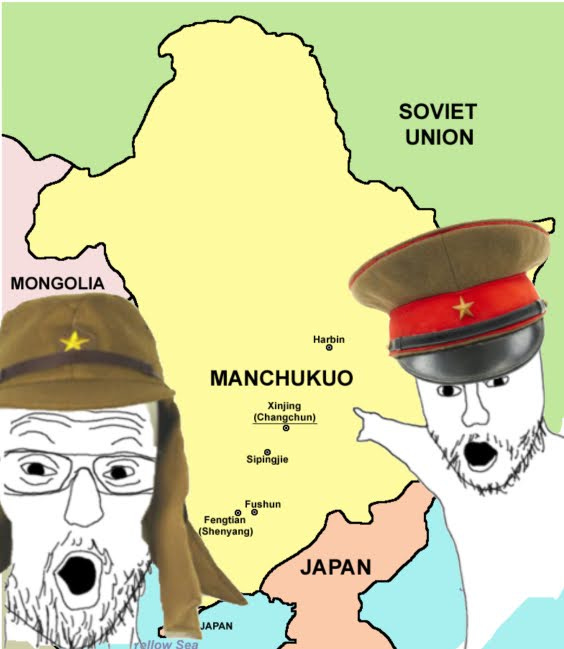
“Japan’s Total Empire: Manchuria and the Culture of Wartime Imperialism” Louise Young - this book looks at the bad Japanese social transformation in the context of its imperial venture Manchukuo. It was here that Japan fully broke with any possible peaceful existence within the international system, and the radical forces that had pushed her into Manchuria were unleashed to dominate society at home. Young looks at the changes in both Manchuria and Japan itself during this period - for the imperialists, Manchuria was a utopia that would economically secure the Japanese Empire, as well as a blank canvas for radical experiments in economics, culture, and colonisation.
“MITI and the Japanese Miracle” Chalmers Johnson - writing in the early 80s, Johnson conducts a historian’s analysis of Japan’s postwar growth miracle, claiming a large role for its economic bureaucrats and the industrial policy they implemented - greatly influenced by their experience before, during, and after the war. The focus on the workings of the bureaucracy makes for rather dry reading, but given the rise of China and the recent turn towards industrial policy (however defined) internationally, this history is interesting context.
China
“Imperial China 900-1800” Frederick Mote - this is a really impressive book; to capture nearly a thousand years of Chinese imperial history in detail is a giant ambition. Mote begins his narrative with the post-Tang collapse, and the recurring theme is the interaction of the Chinese and non-Chinese peoples and its role in state formation. Beyond political narrative he explains key cultural and social trends like the development of neo-Confucianism, and countervailing trends of Sinicisation and nativism among non-Chinese Conquest Dynasty elites like the Jurchens, Mongols, Tanguts, and Manchus.
“China Marches West” Peter Purdue - this is a narrative history of Qing China’s conquest of Xinjiang, and their destruction of the Dzunghar Mongol Khanate. The scope goes far beyond the campaigns, including the reigns of the three great Qing Emperors Kangxi, Yongzheng and Qianlong and their Dzunghar enemies, Manchu-Mongol relations, religious intrigues and diplomacy in Tibet, and Qing relations with Russia. Like some of the other authors here Purdue is a gifted writer and this detail never overburdens the prose.
“Chinese Thought” Roel Sterckx - a short primer for the three great Chinese philosophical traditions Daoism, Legalism, and Confucianism. Useful context particularly if reading “Imperial China”.
“The Great State: China and the World” Timothy Brook - focusing on the interactions between China and the wider world, each chapter in this book starts with an unusual or remarkable document as prop to narrate a vignette: of Mongol princesses heading West to fulfil a marriage pact, a Chinese navy toppling a Sri Lankan king, a Korean bureaucrat making his way home overland after a shipwreck. I share Tanner Greer’s view that the book doesn’t prove the author’s thesis of a major shift in imperial self-conception following the Mongol Yuan regime, but it is an entertaining book nonetheless.
“The Silk Road: A New History” Valerie Hansen - similar in structure to Brook’s work, Hansen uses a series of documents to explain the latest understanding of the Silk Road. Not a rollicking narrative like e.g. “China Marches West” but is very interesting for a peek into how historians glean the past from obscure documents or their fragments.
Other Asia
“The Park Chung Hee Era: The Transformation of South Korea” Byung-kook Kim and Ezra Vogel - South Korea is arguably the most impressive of the post-war Asian success stories, starting as a partitioned war-scarred moonscape yet becoming the world leader in heavy industry, advanced engineering, and popular culture of today. By some measures, Korea has even overtaken its old overlord and rival, Japan. This book traces the economic miracle to the system built by strongman Park Chung-Hee, and analyses it in economic, bureaucratic and political-social terms.
“How Asia Works: Success and Failure in the World’s Most Dynamic Region” Joe Studwell - very much of a set with Vogel and Johnson’s books, this is a brisk read that neatly summarises the export-orientated development model of Japan/Taiwan/Korea (and China, though with a few tweaks) and how it differed from failed models in other parts of Asia (notably the Philippines and Malaysia) and developing world. It also argues Western liberal received wisdom on development has sometimes been unhelpful and sometimes actively damaging, e.g. in the context of the Asian Financial Crisis that derailed Thailand’s economic progress. I did feel he was rather dismissive of Singapore’s success, however.
“The Great Game: On Secret Service in High Asia” Peter Hopkirk - a wonderful, rollicking narrative of the Great Game as British and Russian spies, adventurers and merchants criss-crossed the remotest corners of Central Asia and Tibet.
“Vietnam: an Epic History” Max Hastings - Hastings has a formula: narrative military history that combines the big picture and maps with vivid vignettes of terrible battle, quotes from soldiers, farmers, politicians, those merely unlucky to get caught in the wrong place at the wrong time. This is the formula at its best, adeptly telling the convoluted but familiar story of Vietnam that makes the madness a little more comprehensible. One theme running through the book is that despite the futility and immorality of the American war effort, there really were many Southern Vietnamese who wanted to resist communist domination, and paid a terrible price when it all finally collapsed.